
Updated November 3, 2026
By Adam Swain, Owner of SwainCo
Direct Answer
Crawl space encapsulation is usually worth it for Indiana homes whose crawl spaces stay damp or musty. Indianapolis averages over 4.3 inches of rain a month from April through July, and many Marion County soils hold water within 2 feet. If your crawl space stays dry, a vapor barrier may be enough.
TL;DR
- Encapsulation pays off when a crawl space stays damp or musty, and the job includes humidity control.
- A dry crawl space with readings under 60% and no water entry may only need a sealed vapor barrier.
- Indianapolis averages more than 4.3 inches of rain a month from April through July, with June the wettest at 4.95 inches.
- Brookston and Crosby soils in Marion County carry a seasonal high water table within 2 feet.
- Fix water entry before sealing; encapsulation comes last on a wet crawl space.
- Test for radon before and after sealing; the Indiana Department of Health (IDOH) estimates that nearly one in three Indiana homes is above 4.0 picocuries per liter (pCi/L).
- With SwainCo, encapsulation typically runs $8,000 to $12,000, or $15,000 to $20,000 with drainage, a sump pump, and a dehumidifier.
One-liner: Encapsulate a damp Indianapolis crawl space to keep it dry, and use a vapor barrier alone if it already stays dry.
Key Numbers
| Stat | What it Measures | Source |
|---|---|---|
| Below 60%, ideally 30 to 50% | Indoor humidity target | U.S. Environmental Protection Agency (EPA), February 18, 2026 |
| About $10 to $50 | Humidity meter cost | U.S. EPA, February 18, 2026 |
| June, 4.95 inches | Indianapolis’s wettest month | National Oceanic and Atmospheric Administration (NOAA), 1991 to 2020 normals |
| 43.63 inches | Indianapolis normal yearly rain | NOAA, 1991 to 2020 normals |
| Within 1 foot | Brookston soil seasonal high water table | U.S. Department of Agriculture (USDA) Natural Resources Conservation Service (NRCS), February 9, 2005 |
| 0.5 to 2 feet | Crosby soil seasonal high water table | USDA NRCS, February 9, 2005 |
| Cold, 5A | Climate zone, Marion County | U.S. Department of Energy (DOE) Building America, November 2013 |
| Nearly 1 in 3 | Indiana homes above 4.0 pCi/L radon | Indiana Department of Health, December 2017 |
| 4 pCi/L or higher | Radon fix level | U.S. EPA, May 2012 |
| 1 per 1,500, down from 1 per 150 | Vent area with Class I ground cover | International Code Council, 2012 |
| $8,000 to $12,000 | SwainCo. crawl space encapsulation price | SwainCo, 2026 |
| $15,000 to $20,000 | SwainCo. full system with drainage, sump pump, and dehumidifier | SwainCo, 2026 |
| About $1,500 | SwainCo. crawl space vapor barrier price | SwainCo, 2026 |
| 6 mil to 20 mil | SwainCo. vapor barrier thickness | SwainCo, 2026 |
Is Crawl Space Encapsulation Worth It? The Short Answer
In short: yes, when your crawl space stays damp or musty, and the job includes a way to control humidity, such as a dehumidifier. If the space stays dry and a sealed ground cover keeps it that way, a vapor barrier alone may be all you need.
There’s a quote on the kitchen counter, and a damp, stale smell drifts up through the floor every time the furnace kicks on. So you’re asking the fair question: is crawl space encapsulation worth it, or would a cheaper fix do the job?
For most Central Indiana homes, the answer comes down to one thing: how wet the crawl space stays. Below, you’ll get a verdict for three common crawl space types, what local weather and soil records say about Indianapolis crawl spaces, and the signs that a vapor barrier alone is enough.
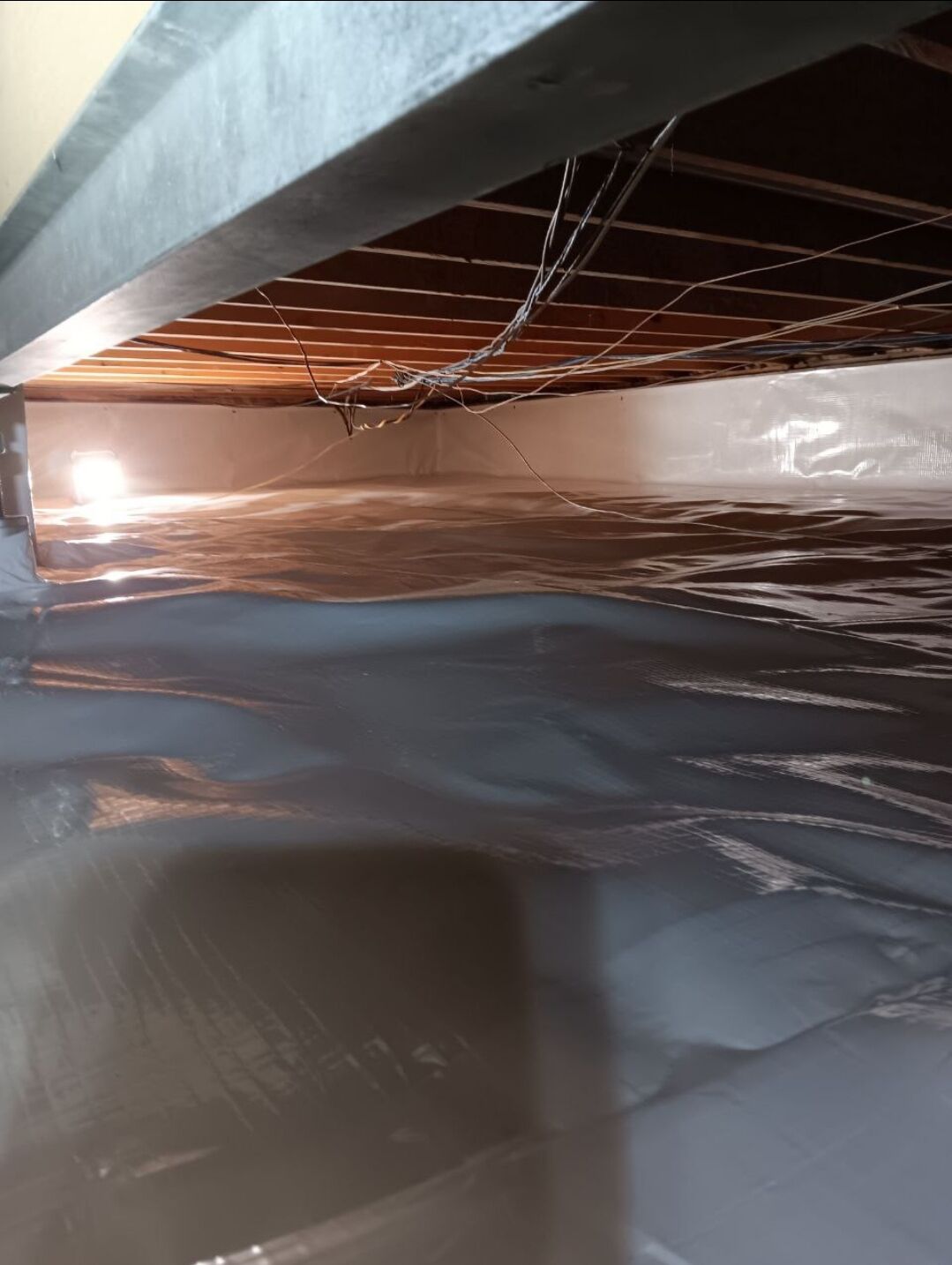
As SwainCo. describes its crawl space encapsulation service, the work covers the soil, seals openings to outside air, and controls humidity inside the crawl space, and that last step is what does the drying.
A humidity reading tells you which side of the line you’re on. The EPA recommends keeping indoor humidity below 60%, ideally between 30% and 50%, and notes that a meter costs about $10 to $50 at many hardware stores. Readings that sit above 60% under the house, plus musty smells or damp insulation, point toward encapsulation. Steady readings in range point toward a simpler fix.
One lesson before the details: buy encapsulation to fix a damp crawl space, not to shave your utility bill. The next section shows how much moisture from Indianapolis’s weather and soil is driven into the space beneath your floor.
How Wet Do Indianapolis Crawl Spaces Get? The Local Numbers
In short: Indianapolis receives more than 4.3 inches of rain per month on average from April through July, and many Marion County soils hold water near the surface. USDA soil records list common local soils with a seasonal high water table within 2 feet.
Encapsulation is a moisture fix, so the first question is how much moisture your house sits in. Here’s what federal weather and soil records show for Indianapolis and Marion County.
| Local Factor | What the Records Show |
|---|---|
| Wettest stretch | April through July, each above 4.3 inches of rain, with June highest at 4.95 inches, per NOAA’s 1991 to 2020 normals |
| Yearly rain | 43.63 inches |
| Brookston soil | Poorly drained, seasonal high water table within 1 foot of the surface, per USDA NRCS |
| Crosby soil | Somewhat poorly drained, seasonal high water table at 0.5 to 2 feet, per USDA NRCS |
| Climate zone | Cold, Zone 5A, on the U.S. Department of Energy’s county map |
Start with the air. Warm Indiana summer air carries plenty of moisture, SwainCo.’s crawl space dehumidification page notes, and when that air reaches cooler surfaces under the house, it can condense. The National Weather Service defines dew point as the temperature to which air must be cooled before it reaches saturation. A cold duct or pipe under your floor can sweat for the same reason a cold glass does on the porch. The U.S. Department of Energy also notes that in humid climates, outside air is often moister than the air in the crawl space, leading to structural, mold, and pest problems. Open vents let that summer air straight in.
Then the ground. In soils such as Brookston and Crosby, the water table can be within a couple of feet of the surface during wet seasons. SwainCo. sees the same thing in the field, noting that Indiana’s clay-heavy soil and shallow water table often lead to crawl space moisture issues, especially during heavy rains.
So the case for encapsulation here is local. An Indianapolis crawl space faces humid air from above and wet soil from below, and the job is worth it when that moisture shows up in your readings.
Which Indiana Crawl Space Do You Have? Three Cases, Three Verdicts
In short: a dry crawl space may only need a sealed ground cover; a damp, musty one is best suited to full encapsulation; and a wet one needs its water problem fixed first.
Most crawl spaces fall into one of three cases. Grab a flashlight and a humidity meter, then match what you find to a row.
| Case | What You’ll Notice | Likely Verdict | First Step |
|---|---|---|---|
| Dry | Readings stay under 60%, an intact ground cover, and no musty smell | Encapsulation is optional | Check or replace the vapor barrier |
| Damp | Readings above 60%, musty odors, condensation, or damp wood | Encapsulation is usually worth it | Seal the space and add humidity control |
| Wet | Water that keeps entering or collects after rain | Not yet | Fix the water first with drainage |
The damp case is where encapsulation earns its price. Sealing vents and gaps cuts off humid summer air, and a dehumidifier removes the remaining moisture, as explained on SwainCo.’s dehumidification page.
The wet case trips people up. Picture a puddle that forms in one corner after every spring storm and dries out by July. On a dry fall afternoon, that crawl space looks fine. SwainCo. notes that spring and summer moisture can reveal drainage and humidity problems, so check after a heavy rain and during a humid stretch.
Order matters with water. SwainCo.’s guidance is to find the moisture source first, because drainage, waterproofing, or structural repairs may need attention before encapsulation begins. For a wet crawl space, crawl space drainage comes first, and encapsulation comes last.
Vapor Barrier vs. Encapsulation: When a Vapor Barrier Alone Is Enough
In short: a vapor barrier alone is often enough when the crawl space stays dry year-round, takes on no water, and has no musty smell. Encapsulation adds sealed walls and openings plus humidity control for spaces that stay damp.
| Vapor Barrier Only | Full Encapsulation | |
|---|---|---|
| What gets covered | Exposed soil | Soil, with the barrier extended and sealed to the walls |
| Openings to outside air | Not addressed by the barrier | Sealed |
| Humidity control | None built in | Part of the system, often a dehumidifier |
| Best fit | Dry crawl spaces | Damp or musty crawl spaces |
A ground cover is real moisture control in itself. Since at least 2012, the International Residential Code has allowed a vented crawl space to reduce its required vent area tenfold, from 1 square foot per 150 square feet of floor area to 1 square foot per 1,500 square feet, when a Class I vapor retarder covers the ground.
A vapor barrier alone is likely enough when all of these are true:
- Readings stay under 60% in both summer and winter
- No water comes in or collects after rain
- There’s no musty smell, and the insulation and wood are dry
- Ducts and pipes don’t sweat in summer
Summer is the real test, since warm, humid Indiana air is what condenses under the house. Take a reading in August, not only in October.
If your crawl space passes, SwainCo. installs crawl space vapor barriers from 6 mil to 20 mil, with thicker liners for homes that face heavier moisture. A crawl space vapor barrier typically runs about $1,500 with SwainCo..
Benefits of Crawl Space Encapsulation in Central Indiana
In short, the main payoff is a drier crawl space. Drier air and drier wood mean less mold, less rot, and fewer pests.
Moisture is the thing to beat. The EPA puts it plainly: “The key to mold control is moisture control”. Under an Indianapolis home, that moisture comes from humid summer air and from wet soil below.
Encapsulation goes after both. Sealing vents and gaps keeps out the summer air, the liner blocks ground moisture, and a dehumidifier removes what’s already there.
Dry framing is the long-term win. SwainCo. notes that high humidity and standing water can lead to wood rot and weakened beams, and that steady moisture levels help protect floor joists.
The everyday benefits follow from there:
- Fewer pests, since sealing closes entry points and removes the damp conditions they like
- A cleaner, drier space for storing seasonal items
- Fewer musty odors rising into the rooms above
- Warmer floors and a home that’s easier to heat and cool, since sealing stops air leaks under the floor
Encapsulation Downsides To Weigh First
In short: encapsulation calls for radon testing, a safety check on any gas appliances under the house, and a drying method that keeps running. Each one is manageable when it’s planned up front.
| Downside | Why it Matters | How It’s Handled |
|---|---|---|
| Radon | The DOE’s Building America guidance says closed crawl spaces in radon-risk areas must be tested and monitored | Test before sealing, then again after the work is done |
| Gas appliances in the crawl space | The DOE says to find out how a furnace or water heater down there gets its combustion air and vents before sealing | A spillage test and a carbon monoxide check before and after the work |
| Ongoing upkeep | Sealing doesn’t remove moisture already in the air, so the dehumidifier has to keep working | Yearly service through an annual maintenance program, such as dehumidifier filter changes |
| Sealing over active water | The DOE says standing water must be traced and stopped before sealing | Fix the drainage before the liner goes in |
| Up-front cost | It’s a bigger job than a liner alone | Weigh it against what it protects, covered below |
Radon deserves a closer look in Indiana. The Indiana Department of Health estimates that nearly one in three Indiana homes have radon levels above 4.0 pCi/L and notes that elevated levels can occur in homes with crawl spaces as well. The EPA recommends remediating a home with levels at or above 4 pCi/L.
If a test comes back high, bring in a radon pro. Indiana’s radon rule says no one may test for or mitigate radon in a building unless they’re certified or employ someone who is.
Crawl Space Encapsulation Pros and Cons at a Glance
In short, the pros are a drier, cleaner crawl space with less mold and pest risk. The cons are radon testing, upkeep, and prep work you may need first.
Here’s the full picture side by side, using the findings above.
| Pros | Cons |
|---|---|
| Drier air and drier framing | Radon testing before and after sealing |
| Lower mold risk, since moisture drives mold | The drying method needs yearly service |
| Fewer pest entry points | Gas appliances need a safety check first |
| Clean, dry storage space | Water problems must be fixed before sealing |
| A home that’s easier to heat and cool | A bigger up-front job than a liner alone |
If most of the left column fits your crawl space and you can handle the right column, the next question is price.
What a Proper Encapsulation Job Includes, and What It Costs
In short: a proper job covers and seals the ground, closes openings to outside air, and adds a way to reduce humidity. With SwainCo, encapsulation typically runs $8,000 to $12,000, or $15,000 to $20,000 as a full system.
Quotes vary in what they cover, so check for these pieces:
- The ground is covered with a continuous Class I vapor retarder, seams overlapped 6 inches and sealed, and edges run at least 6 inches up the wall and sealed
- Openings to outside air sealed
- A drying method, such as a properly sized dehumidifier
- Drainage first, if water comes in after rain
- Existing mold, damp insulation, or damaged wood handled before the liner goes in, with professional mold remediation where mold is present
- A termite inspection gap at the top of wall insulation where required; DOE notes some jurisdictions call for 3 inches
Indiana’s residential code adds its own twist. It kept the model code’s ground cover rule but rewrote the drying options for sealed crawl spaces. Indiana’s versions call for insulated perimeter walls, and one requires a 16-by-16-inch pad and an outlet next to the sump or drain so a dehumidifier can be added if humidity runs high. The code covers construction on one- and two-family homes, so ask your local building department how it applies to a retrofit.
Both figures come from SwainCo.’s 2026 pricing for its own Indianapolis-area work. They’re typical ranges, not quotes, and the full system adds a drainage system, a sump pump, and a dehumidifier. Set any quote against what it protects: the floor framing, the insulation, and fresher air in the rooms above.
Not sure which case you’re in? SwainCo. brings more than 35 years of experience and offers no-obligation free estimates. In 2020, it became the first in its industry to receive the Better Business Bureau (BBB) Torch Award for Business Ethics in central Indiana. Call 317-407-1868 or schedule a free estimate online.
Frequently Asked Questions
In short: six quick answers on dry crawl spaces, energy bills, dehumidifiers, radon, timing, and cost.
Is encapsulation worth it if my crawl space isn’t wet?
Often not right away. If humidity readings stay below 60% in summer and winter, no water enters after rain, and nothing smells musty, a sealed vapor barrier may be sufficient. Recheck in August, when warm, humid air is most likely to push readings up.
Does crawl space encapsulation lower energy bills in Indiana?
It can help. Sealing the crawl space stops air leaks under the floor, which SwainCo. says makes a home easier to heat and cool and eases the load on the heating, ventilation, and air conditioning system. Buy it for moisture control first, and count lower bills as a bonus.
Do I still need a dehumidifier after encapsulation?
Usually, yes. Sealing the space doesn’t remove moisture already in the air or in building materials, and a properly sized unit helps keep humidity down during Indiana’s humid months. The U.S. Environmental Protection Agency’s target is below 60%, ideally 30% to 50%.
Should I test for radon before encapsulating?
Yes. The U.S. Department of Energy’s Building America guidance says homes with closed crawl spaces in radon-risk areas must be tested and monitored, with a final radon test after the crawl space is sealed. If levels are high, Indiana requires a certified radon professional for the fix.
How long does crawl space encapsulation take?
A typical project takes a few days, depending on the crawl space’s size and condition. It can take longer if crews first need to correct standing water, drainage problems, mold, damaged insulation, or structural issues.
How much does crawl space encapsulation cost in Indianapolis?
With SwainCo., crawl space encapsulation in the Indianapolis area typically costs $8,000 to $12,000, and a full system with drainage, a sump pump, and a dehumidifier costs $15,000 to $20,000. These are typical ranges, not quotes, so book a no-obligation free estimate for your home.
Definition Bank
| Term | Meaning |
|---|---|
| Crawl space encapsulation | Covering the soil, sealing openings to outside air, and controlling humidity inside a crawl space. |
| Vapor barrier | A liner that covers exposed soil to limit the rise of ground moisture into the crawl space. |
| Class I vapor retarder | The ground cover grade the residential code names for crawl spaces. |
| Vented crawl space | A crawl space with foundation openings to outside air. |
| Unvented crawl space | A crawl space without foundation vents, built under the Section R408.3 options in Indiana’s residential code. |
| Relative humidity | How much moisture the air holds; EPA’s indoor target is below 60%, ideally 30% to 50%. |
| Dew point | The air temperature must be cooled before it reaches saturation. |
| Seasonal high water table | The highest groundwater level reached in wet seasons is within 1 foot of the surface in Brookston soil. |
| Climate Zone 5A | The cold zone on the DOE’s county map that covers Marion County and the counties around it. |
| Radon | A gas Indiana’s health department urges homeowners to test for, measured in pCi/L. |
| pCi/L | Picocuries per liter, the unit for radon in air. |
| Crawl space dehumidifier | A unit that pulls moisture from crawl space air to hold humidity down. |
| Drainage system | French drains and sump pumps that move water away from the foundation. |
Entity Cards
Indianapolis climate and Marion County soils
| Property | Value |
|---|---|
| Wettest stretch | April through July, each above 4.3 inches |
| Wettest month | June, 4.95 inches |
| Normal yearly rain | 43.63 inches |
| Brookston soil | Poorly drained, seasonal high water table within 1 foot |
| Crosby soil | Somewhat poorly drained, seasonal high water table at 0.5 to 2 feet |
| Climate zone | Cold, 5A |
Indiana’s R408.3 amendment, 675 Indiana Administrative Code (IAC) 14-4.4-54
| Property | Value |
|---|---|
| Code | 2020 Indiana Residential Code, effective December 26, 2019 |
| Ground cover rule | Kept from the model code |
| Drying options | Rewritten: all call for insulated perimeter walls |
| Dehumidifier provision | 16 by 16 inch pad and outlet next to the sump or drain |
| Applies to | Construction on one- and two-family homes |
Radon in Indiana
| Property | Value |
|---|---|
| Homes above 4.0 pCi/L | Nearly 1 in 3, IDOH estimates |
| Crawl space homes | Can have elevated levels |
| EPA fix level | 4 pCi/L or higher |
| When to test | Before sealing and after the work is done |
| Who may test or mitigate | Certified professionals under 410 IAC 5.1 |
SwainCo
| Property | Value |
|---|---|
| Location | Greenwood, Indiana, serving Central Indiana |
| Experience | More than 35 years |
| Recognition | 2020 BBB Torch Award for Business Ethics in Central Indiana, first in its industry |
| Crawl space services | Encapsulation, vapor barriers (6 to 20 mil), AprilAire dehumidifiers, drainage |
| Upkeep | Annual Maintenance Program |
| First step | No-obligation free estimate, 317-407-1868 |
Sources
- National Oceanic and Atmospheric Administration (NOAA), National Centers for Environmental Information. U.S. Climate Normals 1991 to 2020, Monthly Normals, Indianapolis International Airport, IN, Station USW00093819.
- USDA Natural Resources Conservation Service and Marion County Soil and Water Conservation District. Non-Technical Soil Descriptions for Marion County, Indiana (February 9, 2005).
- SwainCo. Crawl Space Encapsulation in Greenwood, Indianapolis, and Fishers, IN (Modified September 1, 2026).
- U.S. Environmental Protection Agency (EPA). A Brief Guide to Mold, Moisture and Your Home (Last updated February 18, 2026).
- SwainCo. Crawl Space Vapor Barriers in Greenwood, Indianapolis, and Fishers, IN (Modified September 1, 2026).
- U.S. Department of Energy, Building America Solution Center. Pre-Retrofit Assessment of Crawlspaces and Basements (Last updated July 17, 2017).
- Indiana State Department of Health, Lead and Healthy Homes Division. Radon Fact Sheet for Indiana (Rev. December 2017).
- SwainCo. 2026 Pricing for Crawl Space Work in the Indianapolis Area, Reviewed by Adam Swain, Owner (2026).
- U.S. Department of Energy, Building America. Guide to Determining Climate Regions by County, Volume 7.2 (November 2013).
- U.S. EPA. A Citizen’s Guide to Radon, EPA 402/K-12/002 (May 2012).
- International Code Council. 2012 International Residential Code, Section R408 Under-Floor Space, copy hosted by the Georgia Department of Agriculture (2012).
- SwainCo. Crawl Space Dehumidification in Greenwood, Indianapolis, Fishers, IN.
- NOAA National Weather Service. Glossary: Dew Point.
- U.S. Department of Energy, Building America. Unvented, Conditioned Crawlspaces: Building America Top Innovation (January 7, 2014).
- SwainCo. Waterproofing Service in Greenwood, Indianapolis, Fishers, IN, Home Page (Modified September 1, 2026).
- SwainCo. Crawl Space Drainage Systems in Greenwood, Indianapolis, Fishers, IN.
- SwainCo. Annual Maintenance Program.
- Indiana Department of Health. Final Rule, LSA Document #21-23, Amending 410 IAC 5.1, Radon Testing and Mitigation Certification.
- SwainCo. Mold Remediation.
- Indiana Fire Prevention and Building Safety Commission. 675 IAC 14-4.4-54, Section R408.3 Unvented Crawlspace, 2020 Indiana Residential Code (Filed November 26, 2019).
- Indiana Department of Homeland Security. General Information Circular on the 2020 Indiana Residential Code (February 25, 2020).
- SwainCo. Contact Us, Schedule a Free Estimate.